
This month, we use one of our client’s investments as an example to illustrate the affect term duration has on the performance of an investment and why it is important to wait out market fluctuations to earn the best returns possible on your investment.
In August 2021, our client Mrs X, invested R258 000 split between a tax-free savings account and a unit trust at Ninety One. Her objective with both investments was to obtain as much growth as possible over the long term. For this, two factors are important to bear in mind when it comes to investing: the term duration and asset allocation.
Term duration
Within a month in September, the client contacted WMD to discuss the performance of her investments thus far. At the time, the investments showed no increase due to market fluctuations as per the following graph:
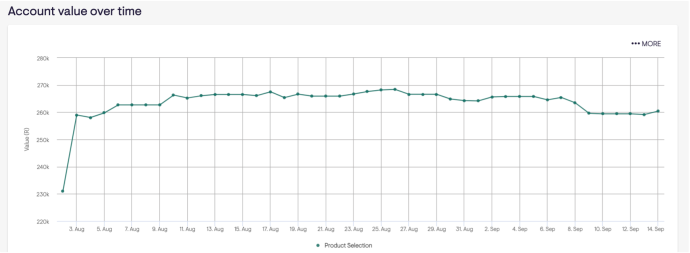
The client argued that if she had deposited the value in a fixed deposit bank account, she could have at least earned 6% interest. However, our financial advisor reminded her that there will always be external factors that influence the performance of investments, and if the client withdrew the funds at this moment, she would be losing out in the long term. The client agreed that her objective was to leave the investment to grow in the long term and after a year and a half in May 2023, the investments’ performance was as follows:
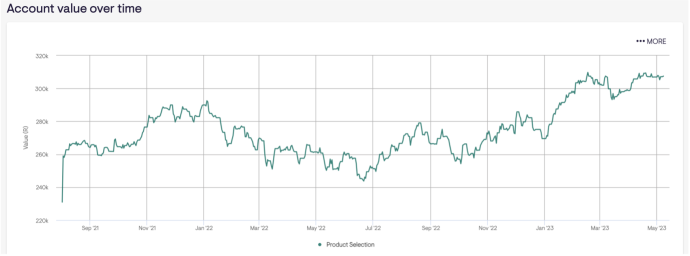
The investment increased with 17% as opposed to less than 10% that the client would have gained from the bank. When it comes to investments, it is easy to make emotional decisions when you see your investment underperforming. Therefore it is important to be rational and aware of the factors that influence your investments in the short term.
This example clearly illustrates why it is important to allow your investment to endure market cycles and leave for the long term, as opposed to abruptly withdrawing the value of your investment in the short term when dips occur. If the client decided to withdraw the investment in 2021, she would have lost out on the opportunity to earn a return of 17%.
Asset allocation
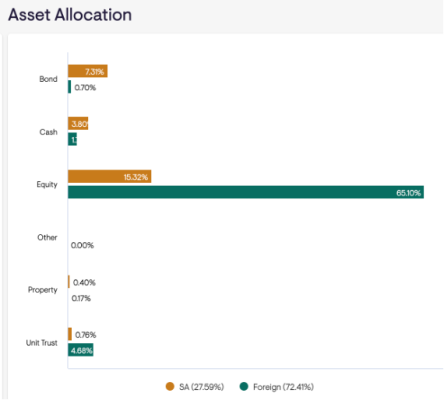
The other key factor to consider is asset allocation. Similar to market cycles that occur, the performance of various asset allocations also fluctuate year on year. For example, if bonds were the top performer in 2021 and 2022, it does not necessarily mean that you should only invest in bonds in 2023. Ensure that you have a diversified portfolio to protect your investment from these fluctuations. As an example, Mrs X’s investments are structured as follows:
In conclusion, do not chase last year’s asset class winners and refrain from panic selling when it seems that your investment is not performing. If you expect to make a lot of money in a few months, investing is not your solution for the short term. You need to understand what to do when your investment experiences a drop during market volatility and allow your returns to recover when the market stabilises again, even if it takes a year, to ensure you do not lose out on significant rebounds.